

Best Laptops 2024: Expert Reviews & Buying Guide
The laptop market is booming, with a vast array of choices catering to diverse needs and budgets. From budget-friendly options for students to high-performance machines for professionals, finding the right laptop can feel overwhelming. This comprehensive guide cuts through the noise, providing in-depth reviews of some of the best laptops currently available on Amazon.de. We’ll analyze their features, performance, pros and cons, and help you determine which laptop best suits your specific requirements. This review focuses on models offering a compelling balance of performance and affordability, perfect for everyday tasks, light productivity, and casual entertainment. Whether you’re a student, a professional, or simply looking for a reliable everyday machine, we’ve got you covered.
Detailed Product Reviews
1. HP Laptop, 17.3 Inch HD+ Display, Intel Celeron N4120, 8 GB DDR4 RAM, 256 GB SSD, Intel UHD Graphics, Windows 11, QWERTZ Keyboard, Black
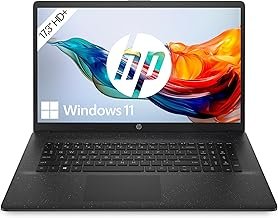
This HP laptop offers a large 17.3-inch display, making it ideal for media consumption and multitasking. The Intel Celeron N4120 processor, while not the most powerful, provides sufficient performance for everyday tasks like browsing, email, and light productivity. 8GB of DDR4 RAM ensures smooth multitasking, and the 256GB SSD offers fast boot times and quick application loading. The QWERTZ keyboard layout is standard for German users.
- Pros: Large screen, decent RAM, fast SSD, affordable price.
- Cons: Relatively low processing power, HD+ resolution (not FHD).
- Use Cases: Students, casual users, everyday computing.
- Target Audience: Budget-conscious consumers who prioritize screen size and a comfortable typing experience.
2. Morostron Laptop with 16 inch, 8 GB DDR and 256 GB SSD, expandable to 1 TB, quad-core processor Pentium up to max
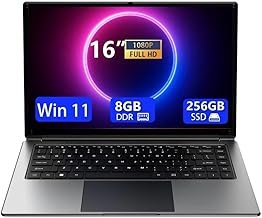
The Morostron laptop presents a compelling option with its 16-inch display, 8GB DDR RAM, and 256GB SSD. The notable feature is its storage expandability up to 1TB, offering greater flexibility for users with large storage needs. The quad-core Pentium processor offers a balance of performance and power efficiency.
- Pros: Expandable storage, decent processor for the price, good RAM.
- Cons: Screen resolution details not specified, limited reviews.
- Use Cases: Students, everyday users needing storage expansion.
- Target Audience: Budget-conscious users requiring ample storage.
3. Jumper Laptop, 16 Inch IPS FHD Touchscreen Laptop, 640 GB Storage, 16 GB DDR4, 1 Year Office 365, QWERTZ Keyboard with Backlight, Fingerprint Reader, WiFi 6, 1920 x 1200, 7000 mAh Battery
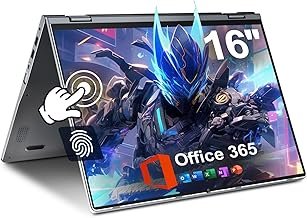
The Jumper laptop stands out with its 16-inch IPS FHD touchscreen, offering vibrant visuals and a responsive touch experience. 16GB of DDR4 RAM ensures smooth performance even under heavy workloads, and the inclusion of a one-year Office 365 subscription adds significant value. The backlit keyboard and fingerprint reader enhance usability and security.
- Pros: FHD touchscreen, large RAM, Office 365 subscription, backlit keyboard, fingerprint reader.
- Cons: Processor details not specified, price point may be higher compared to others.
- Use Cases: Students, professionals, creative users.
- Target Audience: Users who value a high-quality display and enhanced features.
4. HP Laptop, 15.6 Inch FHD Display, Intel Processor N100, 4 GB DDR4 RAM, 128 GB UFS, Intel UHD Graphics, Windows 11 Home in S Mode, QWERTZ Keyboard, Natural Silver
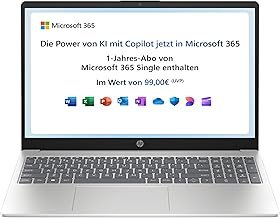
This HP laptop offers a 15.6-inch FHD display, providing sharper visuals compared to the first HP model. However, it comes with only 4GB of RAM and 128GB UFS storage, limiting its multitasking capabilities. The Intel Processor N100 is suitable for basic tasks, but not demanding applications. It runs Windows 11 Home in S Mode.
- Pros: FHD display, relatively affordable.
- Cons: Low RAM, limited storage, S Mode limitations.
- Use Cases: Basic browsing, email, light productivity.
- Target Audience: Users with very basic computing needs and a tight budget.
5. Tablet, Android Tablet 11 Inch with 14GB RAM + 64GB ROM (1TB TF), Octa-Core, Widevine L1, WiFi 6 & BT 5.3, 6800mAh Battery, Dual Camera – Tablet with Keyboard, Mouse, Pen & Case

While technically a tablet, this device is included due to its bundled keyboard, mouse, and pen, making it a functional laptop alternative for some users. The 11-inch display is smaller than most laptops, but the inclusion of 14GB of RAM and an octa-core processor provides decent performance. The expandable storage up to 1TB via microSD is a plus, and the long battery life is another attractive feature.
- Pros: High RAM, expandable storage, long battery life, bundled accessories.
- Cons: Smaller screen size than most laptops, Android OS may not be suitable for all users.
- Use Cases: Students, casual users, media consumption.
- Target Audience: Users seeking an affordable, portable device with good performance.
Comparison Section
Comparing the laptops side-by-side reveals distinct strengths and weaknesses:
| Feature | HP 17.3″ Celeron | Morostron 16″ Pentium | Jumper 16″ IPS FHD | HP 15.6″ N100 | Android Tablet |
|---|---|---|---|---|---|
| Screen Size | 17.3″ HD+ | 16″ | 16″ FHD IPS Touchscreen | 15.6″ FHD | 11″ |
| RAM | 8GB DDR4 | 8GB DDR4 | 16GB DDR4 | 4GB DDR4 | 14GB |
| Storage | 256GB SSD | 256GB SSD (Expandable) | 640GB | 128GB UFS | 64GB ROM (1TB Expandable) |
| Processor | Intel Celeron N4120 | Intel Pentium Quad-Core | Unspecified | Intel N100 | Octa-Core |
| Operating System | Windows 11 | Unspecified | Unspecified | Windows 11 S Mode | Android |
| Touchscreen | No | No | Yes | No | Yes |
Buying Guide
Choosing the right laptop depends on several factors:
- Budget: Determine how much you’re willing to spend. Prices vary greatly based on features and specifications.
- Screen Size and Resolution: Consider your primary use case. Larger screens are better for media consumption and multitasking, while higher resolutions (FHD or higher) provide sharper visuals.
- Processor and RAM: More powerful processors and higher RAM amounts are needed for demanding tasks like gaming and video editing. For everyday use, less powerful options are sufficient.
- Storage: SSD storage is faster than HDD storage. Consider your storage needs based on the number of files and applications you plan to store.
- Operating System: Windows is the most common operating system for laptops, but Chrome OS and macOS are also available.
- Portability: If portability is important, choose a lighter and thinner laptop.
FAQ Section
- What is the difference between an SSD and an HDD? SSD (Solid State Drive) is significantly faster than HDD (Hard Disk Drive), offering quicker boot times and application loading.
- How much RAM do I need for everyday use? 8GB of RAM is generally sufficient for most everyday tasks, but 16GB is recommended for multitasking and more demanding applications.
- What is the difference between Intel Celeron and Intel Pentium processors? Intel Pentium processors are generally more powerful than Intel Celeron processors, offering better performance for more demanding tasks.
- What is Windows 11 S Mode? Windows 11 S Mode is a more restricted version of Windows 11, limiting the apps you can install to those from the Microsoft Store. You can switch out of S Mode if needed.
- What is the best laptop for students? The best laptop for students depends on their needs and budget. A balance of performance, affordability, and portability is usually ideal.
- How important is a backlit keyboard? A backlit keyboard is helpful in low-light environments, making it easier to type.
- What type of laptop is best for graphic design? For graphic design, a laptop with a dedicated graphics card, a high-resolution display, and ample RAM is recommended.
Conclusion and Recommendations
This review has highlighted several compelling laptop options available on Amazon.de. The Jumper laptop stands out with its FHD touchscreen, substantial RAM, and included Office 365 subscription, making it a strong contender for students and professionals. For budget-conscious consumers, the HP 17.3-inch Celeron provides a large screen at an affordable price. Ultimately, the best laptop for you will depend on your individual needs and budget. Carefully consider the factors outlined in our buying guide to make an informed decision.
Remember to check current prices and availability before making your purchase.
—
## 🌟 سرویسهای مفید آمازون
علاوه بر محصولات بالا، این سرویسهای آمازون نیز میتوانند برای شما مفید باشند:
### 🔥 Amazon Prime
Free shipping, unlimited video and music
[👈 دریافت Amazon Prime](https://www.amazon.de/amazonprime?tag=buysmartersho-21)

![Ninja [AF300EU] 2 Large Frying Compartments, 6 Functions, 2470 W, 2 Independent Garzones, 7.6 Litres, 65% Save Energy Costs](https://findefine.de/wp-content/uploads/2025/09/product_1757702691800_ol2eqq78y-150x150.jpg)